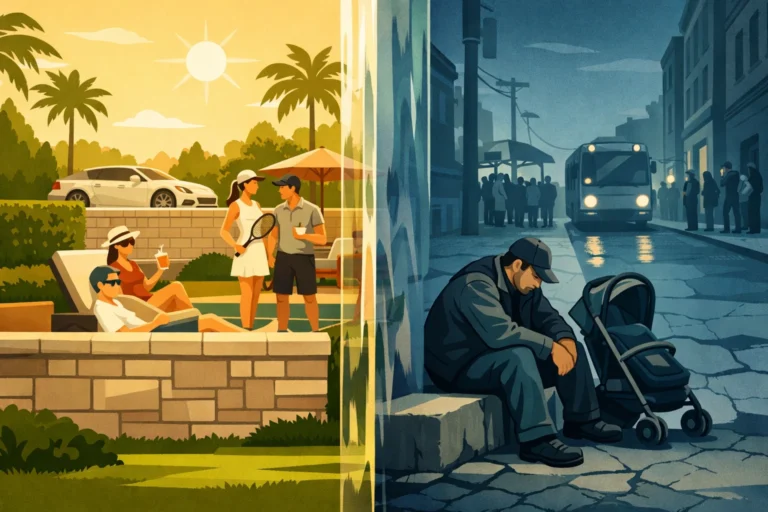
The Stories We Tell About Unfairness
When former professional tennis players talk about their careers, many recall questionable officiating, bad calls, and decisions that were difficult to accept. They often arrive at a similar conclusion: this is exactly why children should learn from an early age to stay composed and keep playing despite unfairness. Lately, I’ve heard several stories like this, and what struck me was how similar their structure tends to be.
It wasn’t the advice itself that caught my attention. The ability not to fall apart because of someone else’s mistake is undeniably valuable. What interested me more was the narrative pattern: the story begins with experienced injustice and ends with advice on how an individual should adapt to it. What I rarely hear, however, are stories about whether those same athletes later tried to change what they once considered unfair. Perhaps they used existing channels, worked with other players, advocated for reforms, or proposed new solutions. If they did, I simply haven’t heard those stories yet.
I find this particularly interesting because, over the past few decades, psychology has accumulated substantial evidence showing that perceived fairness in one’s environment is associated with motivation, trust, engagement, and persistence. We understand fairly well that unfairness is not merely an unpleasant experience—it is a property of the environment that can shape how people relate to what they do. Which naturally raises another question: if the environment matters so much, why do our stories focus primarily on helping individuals adapt to imperfect environments rather than on making those environments a little better?
There is another layer that seems to receive far less attention. Children are influenced not only by the officiating itself, but also by the stories adults tell about their experiences. If respected athletes repeatedly describe the same trajectory—“I was treated unfairly, I learned to live with it, and now you should learn to do the same”—they are passing on more than personal experience. They are also transmitting a particular norm of response. Not intentionally, but simply because every story becomes part of the environment in which the next generation grows up.
Sometimes I wonder what the culture of tennis might look like if stories of personal resilience were regularly accompanied by different kinds of stories.
“We tried to improve the officiating process.”
“We worked with tournament organizers.”
“Here’s what changed, and here’s what didn’t.”
“Not everything succeeded, but we’re still thinking about how to make the system better.”
Perhaps children would then learn not only how to remain composed in the face of unfairness, but also to see improving the environment itself as a natural part of belonging to a community.