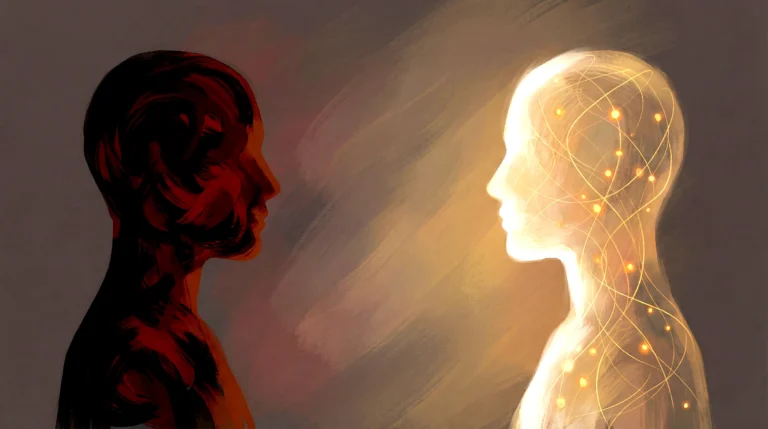
Body as Environment: Who Shapes Public Consciousness?
Over the past few days, my son and I have played a lot of tennis and spent hours walking. Today my body feels unusually present. My legs are heavy, my arms ache, and even this ordinary fatigue has altered more than my physical state. It has changed the landscape of thought itself. My attention keeps returning to my body, while the ideas that usually connect so effortlessly seem unable to reach their familiar altitude.
We tend to trace our beliefs to education, culture, upbringing, and personal experience. Yet every experience is lived through a body. The body does not merely allow us to exist in the world; it shapes the very way the world appears to us.
The world unfolds differently through a young body than through an old one, through a healthy body than through one living with chronic pain, through a body full of energy than through one worn down by exhaustion. What changes is not only how we feel. It is also what captures our attention, what seems urgent, what appears possible, and what quietly disappears from view.
If this is true for individuals, perhaps it is worth asking what it means for society as a whole.
We debate the ideas of politicians, scientists, writers, entrepreneurs, journalists, artists, and other people who shape public consciousness, because their words, decisions, and creations gradually become part of culture. We examine their values, beliefs, education, and motivations, yet we rarely ask what kind of embodied experience stands behind those ideas.
What happens when certain embodied experiences dominate public life while others are scarcely represented? When the loudest voices belong primarily to the young—or, conversely, to the old; to the healthy rather than those living with pain; to people whose bodies move through the world with ease rather than those whose everyday lives are shaped by physical limitation?
Perhaps the range of bodies represented among those who shape public consciousness matters no less than the range of ideas they defend.
This text was developed with the assistance of AI and edited by the author.